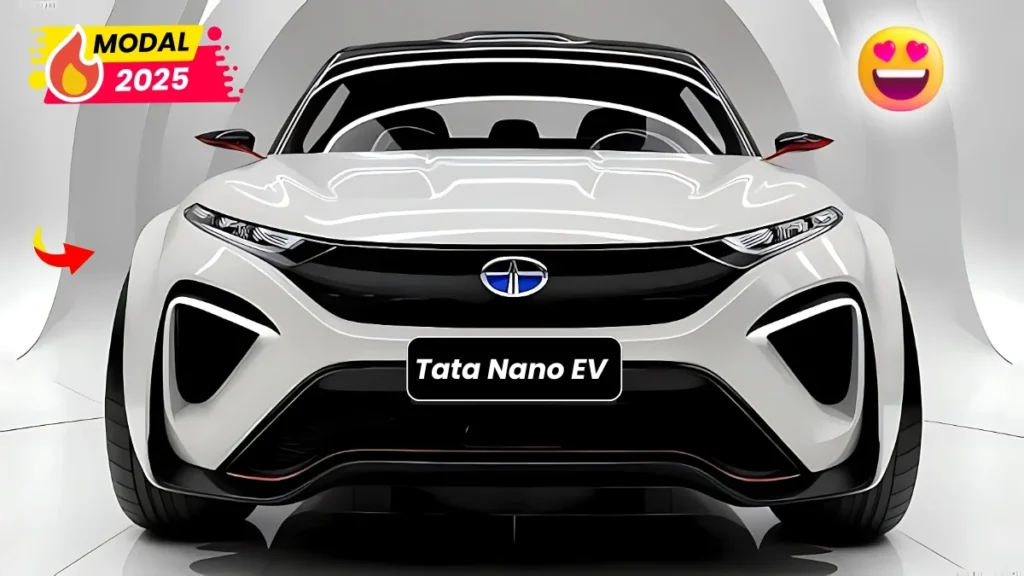
The small car that once changed the Indian automobile market is expected to return in a completely new electric form. The Tata Nano EV 2026 is being talked about as an affordable electric car designed for city drivers who want a practical and budget-friendly EV. With a claimed 300 km driving range, updated styling, and modern technology, this electric hatchback aims to bring electric mobility closer to everyday buyers.
While the original Tata Nano was known as one of the most affordable cars in India, the new electric version focuses on efficiency, low running cost, and simple urban usability. Let’s look at its design, performance, features, and expected price in detail.
Overview Table
| Feature | Details |
|---|---|
| Model | Tata Nano EV 2026 |
| Vehicle Type | Electric Hatchback |
| Driving Range | Up to 300 km (claimed) |
| Battery Type | Lithium-Ion |
| Charging Time | 4–6 Hours (Standard) |
| Top Speed | Around 100 km/h |
| Seating Capacity | 4 Passengers |
| Key Features | Touchscreen, Smart Connectivity |
| Expected Price | ₹5 – ₹7 Lakh (Estimated) |
Key Highlights
The Nano EV 2026 focuses on simplicity and efficiency while offering some modern features. Here are the main highlights:
-
Up to 300 km electric driving range
-
Compact size perfect for city traffic
-
Updated design with modern styling
-
Smart infotainment and connectivity features
-
Affordable pricing for first-time EV buyers
These highlights make it a strong option for daily commuting in cities.
Exterior Design
The exterior design of the Nano EV 2026 is expected to look much more modern compared to the older model. The car may feature sleeker headlamps, a closed front grille typical of electric vehicles, and stylish LED lighting.
The body shape remains compact, which helps in easy parking and smooth movement through crowded streets. The new alloy wheels, updated bumper design, and fresh color options also add a more premium feel.
Despite its small size, the car looks more refined and balanced than before.
Interior and Comfort
Inside the cabin, the Nano EV 2026 is expected to offer a cleaner and more modern layout. The dashboard design may be simple but practical, focusing on comfort and usability.
The seats are designed to comfortably accommodate four passengers. Cushioning is expected to be improved compared to the earlier Nano, making city drives more comfortable. Legroom and headroom are decent for a compact car.
Air conditioning, power windows, and better interior materials may also be included in higher variants.
Infotainment and Technology
The Nano EV 2026 may include a touchscreen infotainment system that supports smartphone connectivity. This system could allow drivers to access music, navigation, and phone functions easily.
Other expected technology features include:
-
Digital instrument cluster
-
Bluetooth connectivity
-
USB charging ports
-
Smart vehicle information display
These additions make the small electric car feel more modern and convenient for daily use.
Powertrain and Performance
The Nano EV 2026 will be powered by an electric motor connected to a lithium-ion battery pack. The system is designed to provide smooth and quiet driving.
The claimed driving range of around 300 km on a single charge makes it suitable for daily commuting and short trips. Acceleration will likely feel quick at city speeds because electric motors deliver instant torque.
Top speed is expected to be around 100 km/h, which is enough for city and occasional highway driving.
Ride Quality and Handling
Thanks to its compact size and light weight, the Nano EV 2026 should be easy to drive in tight city streets. Steering is expected to be light, which helps while parking or driving in traffic.
The suspension setup will likely be tuned for comfort, absorbing bumps and uneven roads fairly well. While it may not be a performance-oriented car, it should provide a stable and relaxed driving experience.
Handling will focus on practicality rather than sporty driving.
Safety and Driver Assistance
Safety is an important area where improvements are expected compared to the earlier Nano model. The new electric version may include features such as:
-
Dual airbags
-
Anti-lock braking system (ABS)
-
Electronic stability control (ESC)
-
Rear parking sensors
-
Stronger body structure
These features help improve safety for both the driver and passengers.
Practicality and Utility
The Nano EV 2026 is designed mainly for urban use. Its small footprint makes it easy to drive in crowded areas and park in tight spaces.
The running cost is expected to be very low because electricity is cheaper than petrol. Maintenance costs are also usually lower for electric vehicles since they have fewer moving parts.
The rear boot space may be small, but it should be enough for daily shopping or small luggage.
Pricing and Availability
One of the most exciting aspects of the Nano EV 2026 is its expected affordable pricing. The car may start from around ₹5 lakh to ₹7 lakh, depending on the variant and battery configuration.
If launched at this price, it could become one of the most affordable electric cars in India. The vehicle is expected to be available through Tata Motors dealerships across major cities once officially launched.
FAQs
Q1. What is the driving range of the Tata Nano EV 2026?
The expected driving range is around 300 km on a full charge.
Q2. Is the Nano EV suitable for city driving?
Yes, its compact size and easy handling make it ideal for city use.
Q3. How long does it take to charge the battery?
Charging may take around 4 to 6 hours with a standard charger.
Q4. How many people can sit in the car?
The Nano EV 2026 is expected to seat four passengers.
Q5. What is the expected price?
The estimated price range is between ₹5 lakh and ₹7 lakh.
Final Verdict
The Tata Nano EV 2026 could become an important step toward making electric cars more accessible in India. With a practical 300 km range, compact design, modern features, and affordable pricing, it has the potential to attract first-time EV buyers and city commuters.
While it may not be a luxury vehicle, it focuses on what many drivers really need—low running cost, simple usability, and reliable daily transportation. If priced correctly, the Nano EV could once again become a popular choice in the Indian car market.